BIM to GIS · Research prototype
What survives an IFC-to-CityGML conversion?
On 160 controlled IFC inputs, constrained repair recovered 14 previously rejected exports. Accepted outputs passing every reference check rose from 97 to 111.
My contribution
I built the converter and the research checks that compare exported geometry with analytical references and account for accepted, review, rejected and failed outcomes.
Inspect one controlled connection
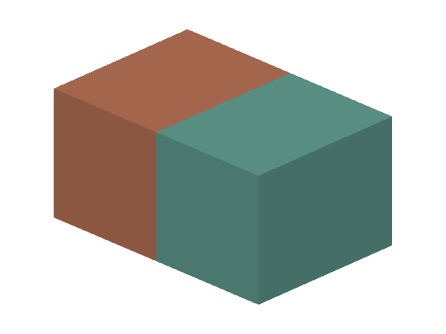
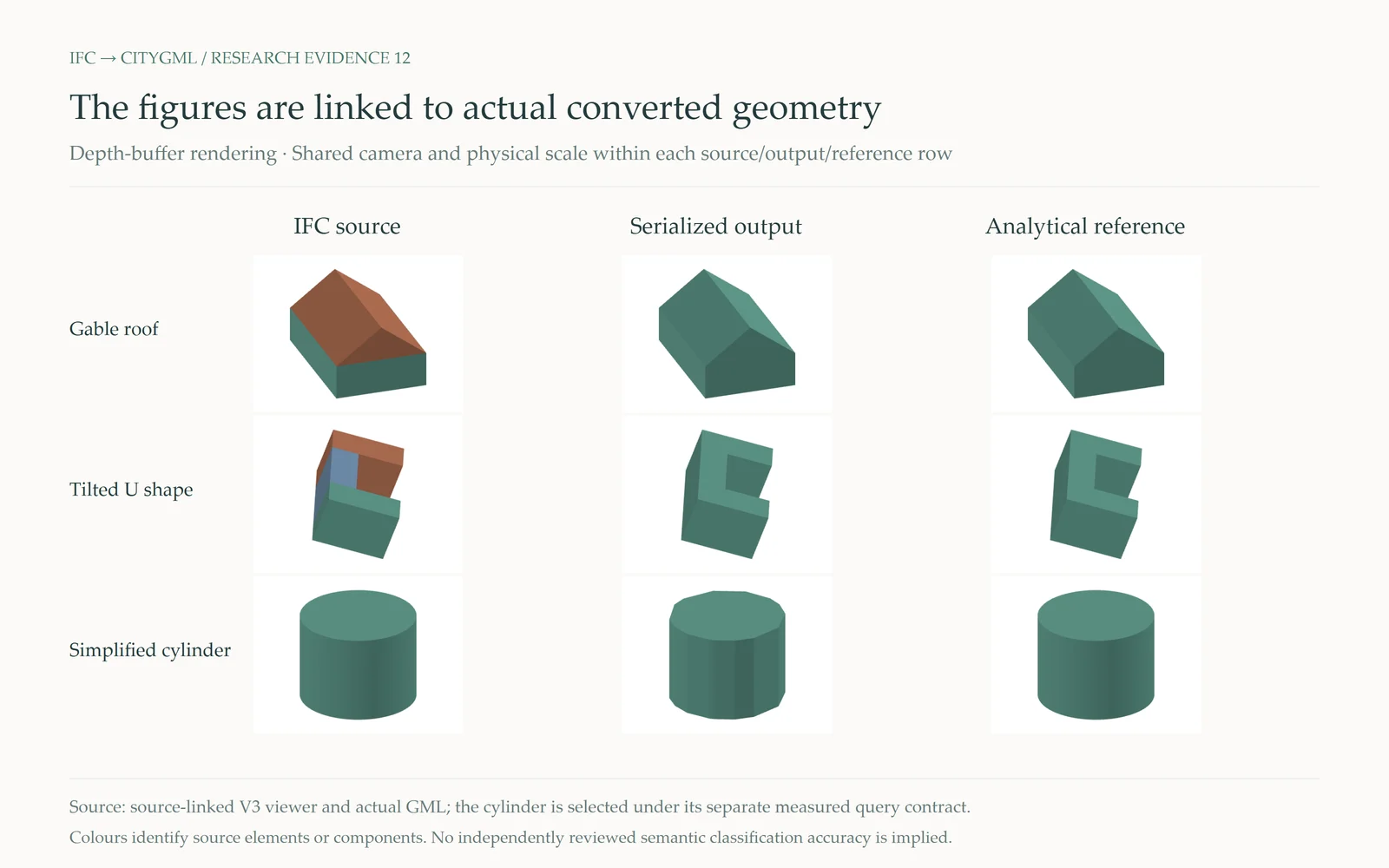
Case 0004 uses two synthetic IFC elements with a declared connection. All three views use the same camera and scale.
The repaired export and analytical reference produce the same image at this scale.
Two source elements. With repair off, the output kept two components and failed the reference checks.
Constrained repair produced one connected component. The exported geometry passed the registered reference checks.
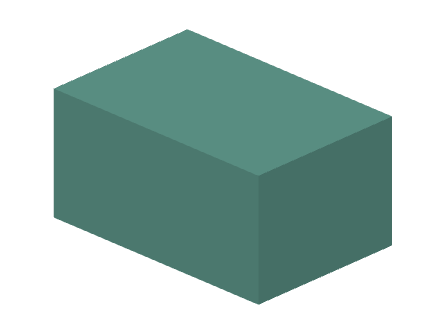
The benchmark uses this analytically defined solid as its target.
What constrained repair changed
| Outcome on the same 160 analytical inputs | Repair off | Constrained repair |
|---|---|---|
| Accepted and reference checks passed | 97 | 111 |
| Accepted with a failed reference check | 4 | 4 |
| Sent for review | 11 | 11 |
| Rejected | 47 | 33 |
| Execution failure | 1 | 1 |
The same 14 cases moved from rejection to passing. Four accepted outputs still missed a reference check. This is an experimental benchmark with controlled input geometry and analytical references.
What the project delivered
- I built a converter that exports building blocks, envelope surfaces and source-preserving elements, including door and window host relationships.
- The coordinate audit records the source placement, engineering frame and georeferencing choice with the output.
- In the earlier 32-case oblique experiment, all outputs passed surface validation and 16 met all reference and topology checks.
Tools and methods
- IFC4
- CityGML 3.0
- Python
- val3dity
Project gallery
Select an image to view it at full size.
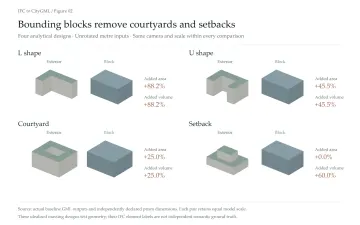
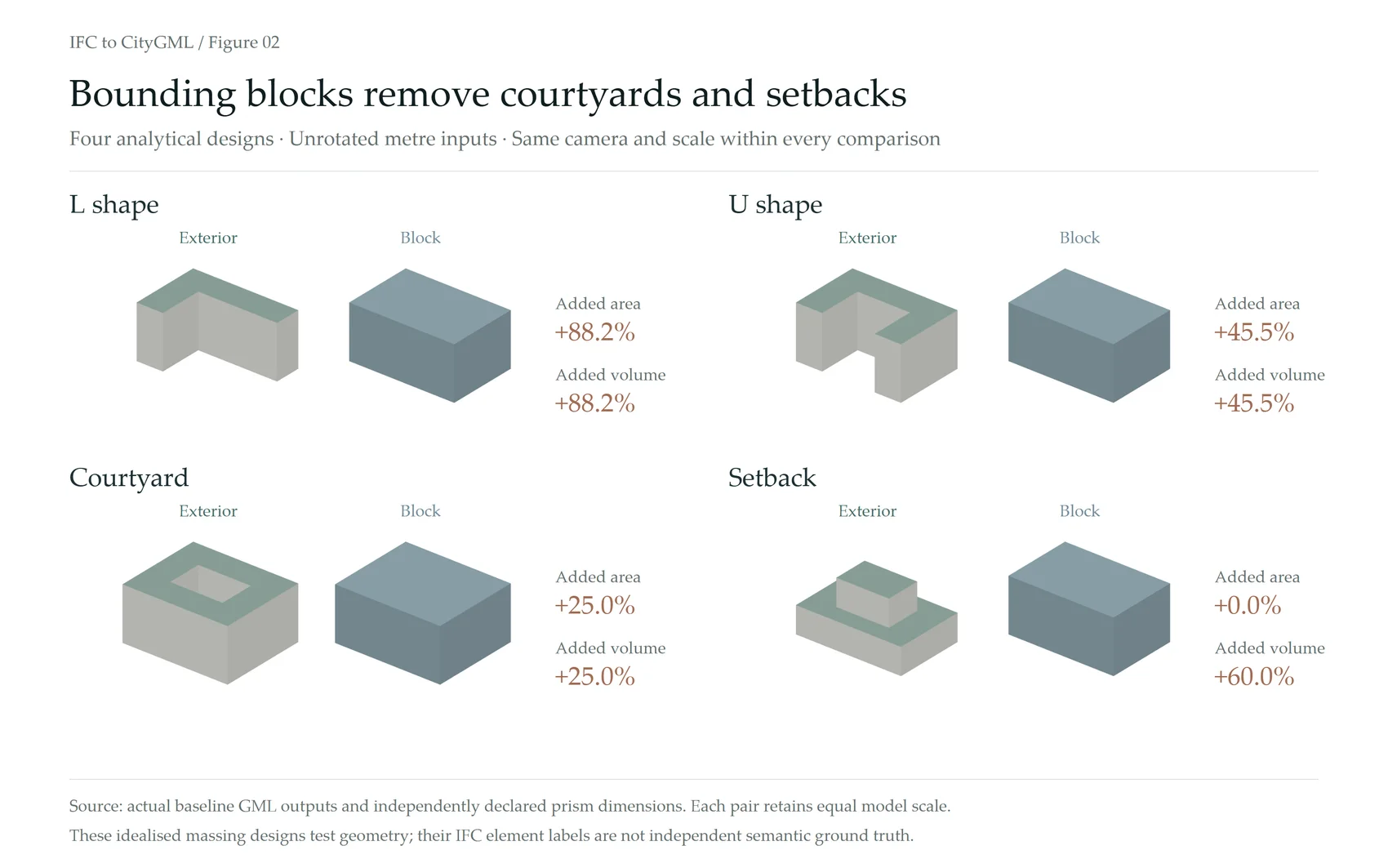
Earlier controlled comparisons of analytical designs and simplified building blocks. 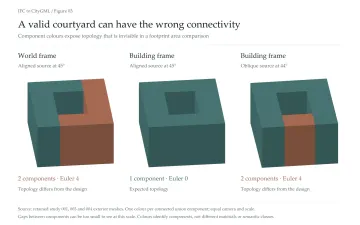
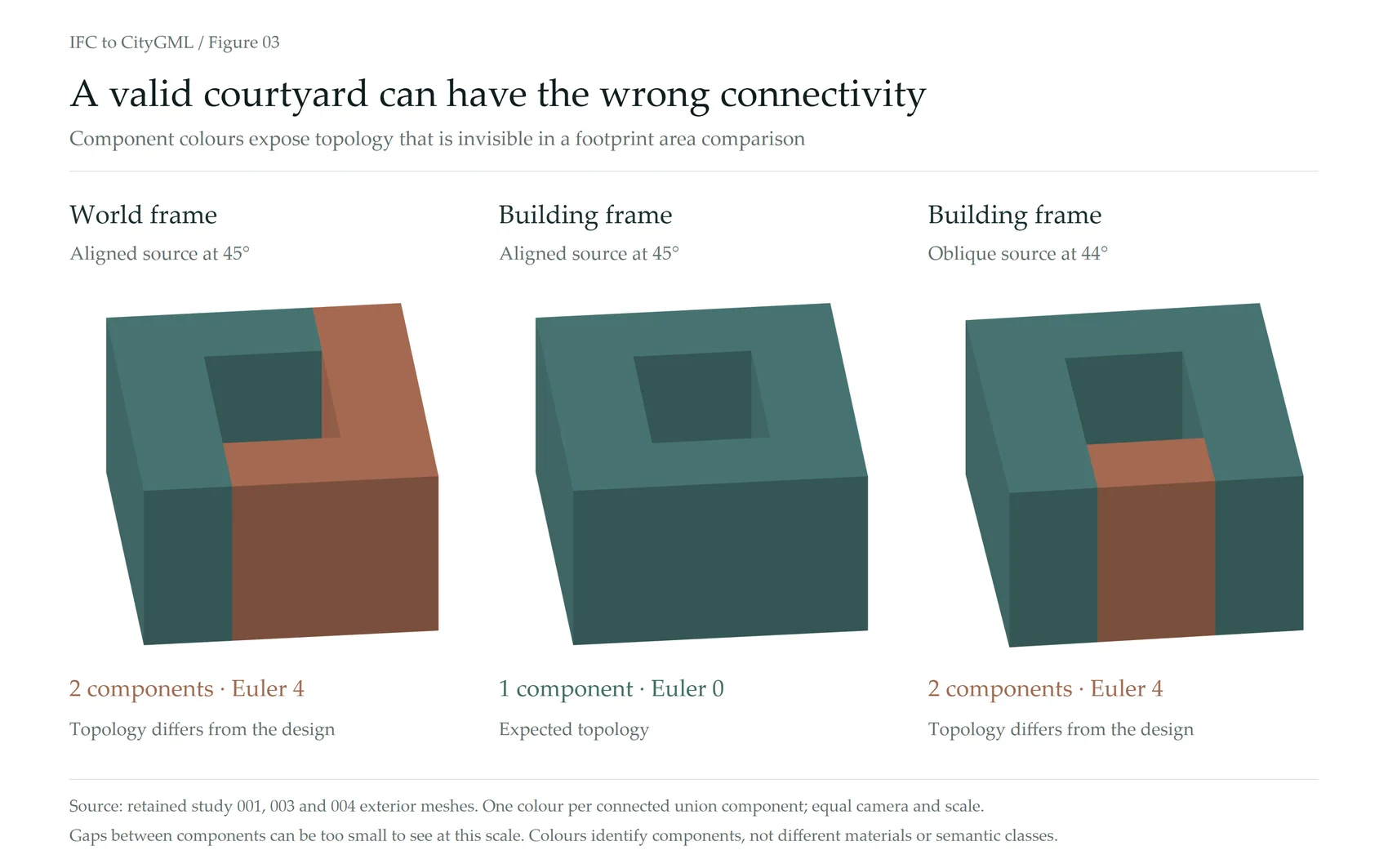
Controlled courtyard example. Colours identify mesh components with gaps too small to see at this scale.